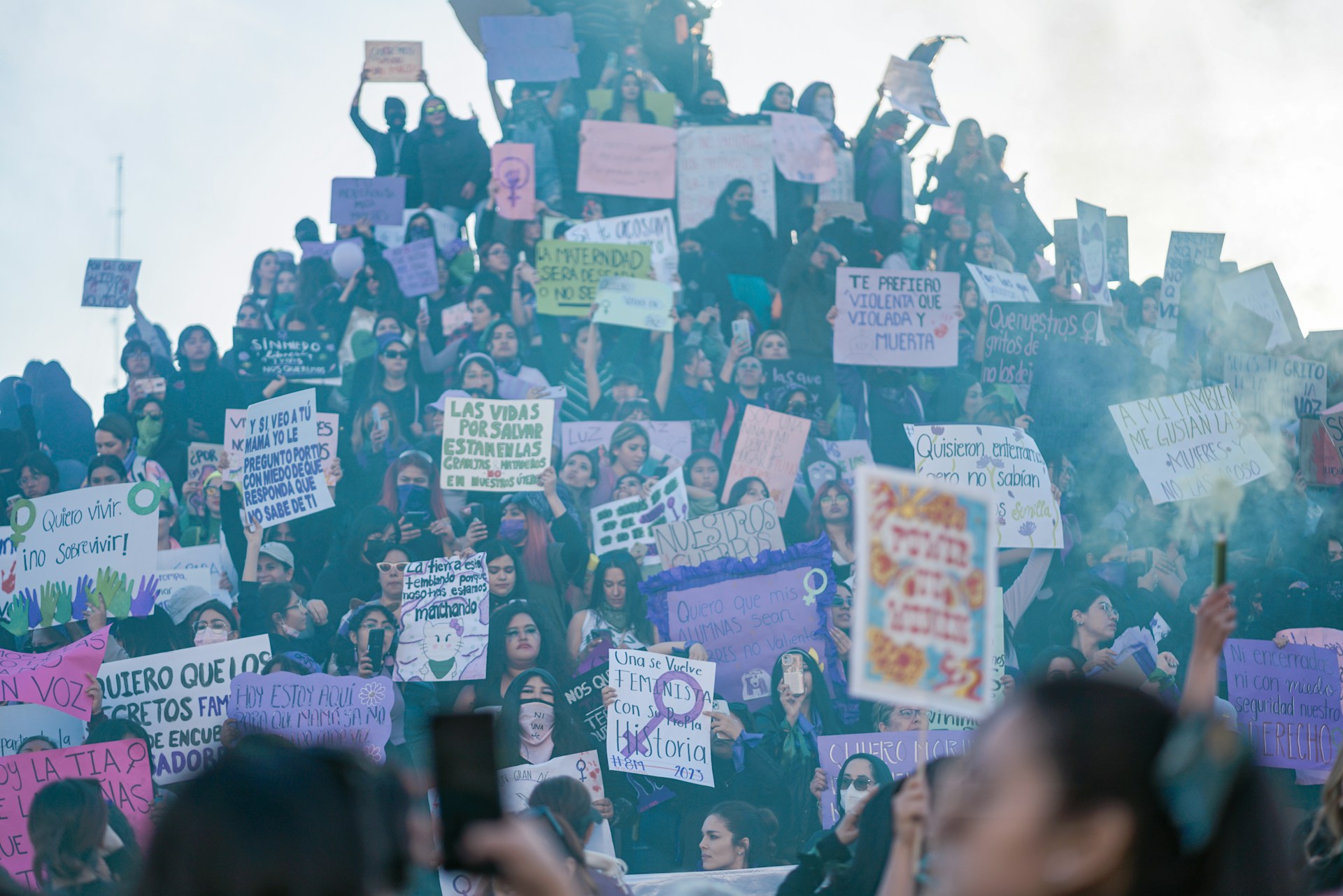
Yesterday marked the annual ‘International women’s day’ where once again we saw the regular influx on our social media feeds of covert brand advertising on instagram, angry tweets on X and a massive rise of people searching ‘when is international mens day?’
Though we seem to have come far as women, in 2026, why is one day a year for women so debated, when men have the other 364?
Every year I love seeing the celebration of women and our achievements, edits of sportswomen winning races and collecting titles and an abundance of facts about women who have contributed greatly to science, literature and numerous other fields.
Many critics of this occasion believe that Western women are completely free and have no need to further their feminism. But even in modern day Britain, misogyny is still engrained in our culture almost unknowingly it is so normalised. The fact is, misogyny is able to intertwine itself with just about every other factor that may disadvantage a woman, whether it is her class, financial status, her race or her sexuality, as bell hooks argued there are levels of sex based discrimination women can face and other factors can feed into these.
Though I am incredibly thankful to be a woman in a decent position, medical misogyny is one thing I have experienced in modern day Britain. I usually hear stories of women being dismissed for endometriosis, however, it is coming to light that other conditions affecting mainly females are also being brushed under the carpet. Only two weeks ago, I was diagnosed with a chronic embedded UTI – a condition not recognised by the NHS, so the last few years I have had under my Urology department have essentially been pointless. For the first time in five years, I saw a male doctor who said ‘I’m so sorry you have had to deal with this, you must have had a horrible time of it, I believe you.’ And that small sentence had been all I had fought to hear the last few years when other doctors had told me that bladder issues are something ‘some women just have to deal with’.
Another failing I have recognised in Britain is one where women are distinguished negatively due to region and social class. And as a woman from a working class community and apparently quite a strong Yorkshire accent, firsthand I believe misogyny is more rampant in small communities. Moving to a city as a university student was eye opening – a great diversity of people and an overwhelming feeling of acceptance was so unusual, as compared to an area quite as closed off as where I live. In fact, newfound statistics render my hometown as one of the most deprived in the country and this is obvious through the differences of women I have perceived. Very few women from my area have pursued higher and further education and have been seemingly content to settle down straight out of school, perhaps quite an old fashioned value. Whether this is due to choice of the women or the lack of opportunity we are presented with while living in a deprived area is up for debate. Not to say either path is more valued, as it is completely up to the woman how she decides to live her life, but I can’t help but feel some of these women perhaps did want to experience a longer time in education.
My measly examples are perhaps a drop in the ocean compared to other women, so I cannot speak on their behalf. I also cannot comment for women living in countries that are still fighting for basic human rights and equality, who should be the front and centre of international women’s day and the protesting, advocating and campaigning we need to do to make sure that one day, every woman is completely free and equal – legally and socially.
My personal main irk of IWD is the abundance of posts made by companies on social media being absolutely see-through. Beauty brands with the sudden offers and discounts and clothing brands who continue to use underpaid female garment workers or even child labour – the hypocrisy is rife. On a day like International Women’s Day, efforts scattered across social media by companies dismantle the true meaning of the event and once again commercialise something that needs to be about changing women’s lives for the better, rather than sell products that help her cover the insecurities the patriarchy has helped create.
Even though first and second wave feminism paved the way for the rights of woman in Britain, there is still much room for improvement. We women should not have to fight for our healthcare. And while one woman fights for medical recognition in Britain, another woman fights for her right to an abortion in the USA. International women’s day should not just be about the celebration of women and our undoubtable excellence, but it should also bring to light prominent issues we still face, that can be complicated and not altered by simple changes of the law. Misogyny still runs deep worldwide, whether it is obvious and with intent or just the natural behaviour of us as humans and the society and norms we have been exposed to and therefore normalised.